
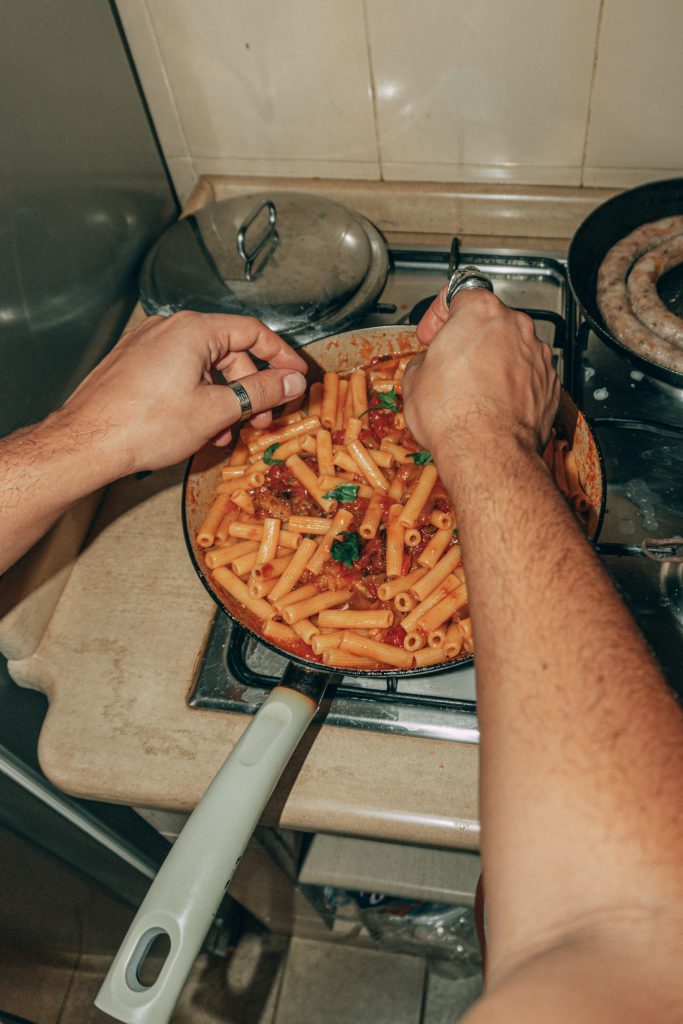
Most meals are functional. Breakfast is a relay, lunch is a break between tasks, dinner is often the last item on a list. A long lunch is different: it has no next thing pressing at the edges.
It does not need to be fancy. It needs to be long enough that the conversation can change direction.
Choose a day that can stretch
A long lunch works best when neither of you has a hard return time. A weekend afternoon, a day off, a holiday. If you only have an hour, take the hour and call it what it is. The ritual is not the duration; it is the absence of hurry.
Make the table a place to stay
Put the phones away. Bring the food to the table instead of eating from the counter. If you can, sit somewhere with light. The physical setup tells both of you that this is not a pit stop.
You do not need a restaurant. Bread, cheese, soup, leftovers. The point is the pause.
Let the conversation wander
Do not arrive with an agenda. Ask one open question and see where it goes. "What has been on your mind lately?" "What are you looking forward to?" "What is one thing you want to do before the year ends?"
If the conversation lands on something difficult, stay with it. A long lunch has room to be serious and then return to the light.
Do it again
A ritual becomes a ritual through repetition. Put a long lunch on the calendar once a month. It can be the same table, the same simple food. The familiarity is part of the pleasure.
A small practice
This month, choose one meal and give it twice as much time as usual. No phones, no errands after. Let the conversation be slower than the day.